Upon getting fired, Olivia, her head down, feet shuffling, sweaty hands carrying her bankers box full of personal belongings, made her way through the busy office. Eyes downcast, focusing only on the floor, and avoiding all contact with any other living thing, she shuffled out the nearest exit towards the parking lot feeling all the shame, embarrassment, and humiliation that this experience brought her.

“Have a nice day.”
A rather sad, but a rather common occurrence just the same.
Just a short time ago, Olivia was regarded as a productive member of society, a “really good person.” She was someone who could always be counted on. Someone who mattered. Now, because she finds herself jobless, she may not be held in such high esteem. And that’s just part of what unemployment means to her.
It also means a lot of unwanted emotions are now Olivia’s best friends who may never, ever leave her side. Emotions like emptiness, the feeling of failure, desperation, and the fear of just about everyone and everything will now govern her life.
And it brings the one searing question that will occupy most of her thoughts: “How in the hell am I going to make it through until tomorrow?”
And honestly, how many times do we get to sit down with anyone, and I mean anyone, and really talk about that part of being unemployed? Rarely, if ever.
We simply just never get it out.
 A long time ago I remember reading an article about soldiers returning from the Vietnam War. After serving his 12-month duty in the war zone, the typical combat soldier was airlifted out by helicopter, taken to the nearest air force base, where he then jumped on a plane headed back to the U.S.A. In other words, if he left on Monday, he’d be home (“back in the world,” as they called it) by about Tuesday.
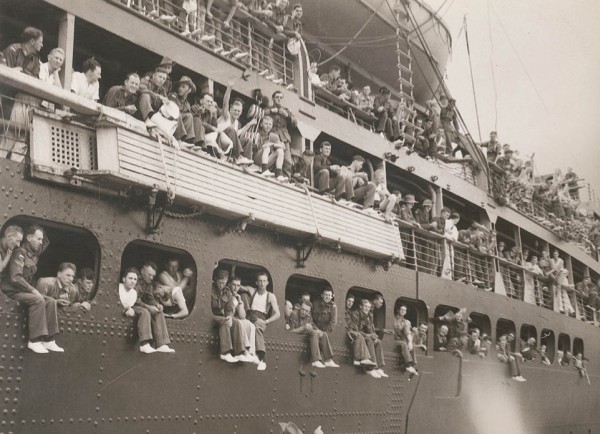
In contrast, the soldiers coming home from World War Two after their service was over were put on a big boat with all the other soldiers that took weeks to bring them home.
Well, someone in the Defense Department took a look at the incidence of Post Traumatic Stress Disorder (PTSD) between the Vietnam Vet and the World War Two Vet, and among all the many reasons for this disorder, he concluded that one of the reasons PTSD was higher during Vietnam than World War Two, was that those returning from World War Two had time, important time, to decompress. They had time to sort some of the madness out. Time to speak with other soldiers on that big slow boat about shared experiences. Time to at least face down some of the demons and begin to heal.
For those serving in Vietnam, there was no time. On Monday, the fighting man was somewhere in the dense, water logged jungles being shot at by an enemy he couldn’t see, and existing somewhere on the seventh circle (the outer ring) of Dante’s Inferno. On Wednesday, he was back in the world, shopping for cake mix and trying to act normal.
I tell you this because, well, it’s something I know, and now it’s something you know. I also tell you this because even though I am not comparing combat in Vietnam to you getting fired, you are at least a little bit, like the Vietnam Vet. You are not given any or enough time to even begin to heal.
Let’s try and not forget about Olivia.
My advice? Let’s talk about it.

RealAdviceForTheUnemployed